A submersible pump is a very useful machine. It is used to pull water from deep underground — like from borewells, wells, or sumps. Whether you use it at home, on a farm, or at a construction site, a submersible pump works hard every day.
But just like any other machine, a submersible pump also needs proper care. If you ignore its maintenance, it can break down faster and cost you a lot of money in repairs or replacement.
In this blog, we will share simple and easy tips to maintain your submersible pump so that it runs smoothly for many years.
1. Check the Water Quality Regularly
The quality of water your pump handles matters a lot. If the water contains too much sand, grit, or dirt, it can damage the pump’s motor and internal parts over time.
What you should do:
- Use a screen or filter at the pump inlet to block large particles.
- Test the water regularly if you notice unusual sediments.
- If the water is too sandy, consider installing a sand separator.
2. Keep an Eye on the Motor Temperature
Submersible pumps are designed to stay cool because they work underwater. But sometimes, due to low water levels or long running hours, the motor can overheat.
What you should do:
- Never run the pump in a dry borewell or when the water level is very low.
- Use a dry-run protection device to automatically stop the pump if water runs out.
- Give the pump some rest if it has been running for too long.
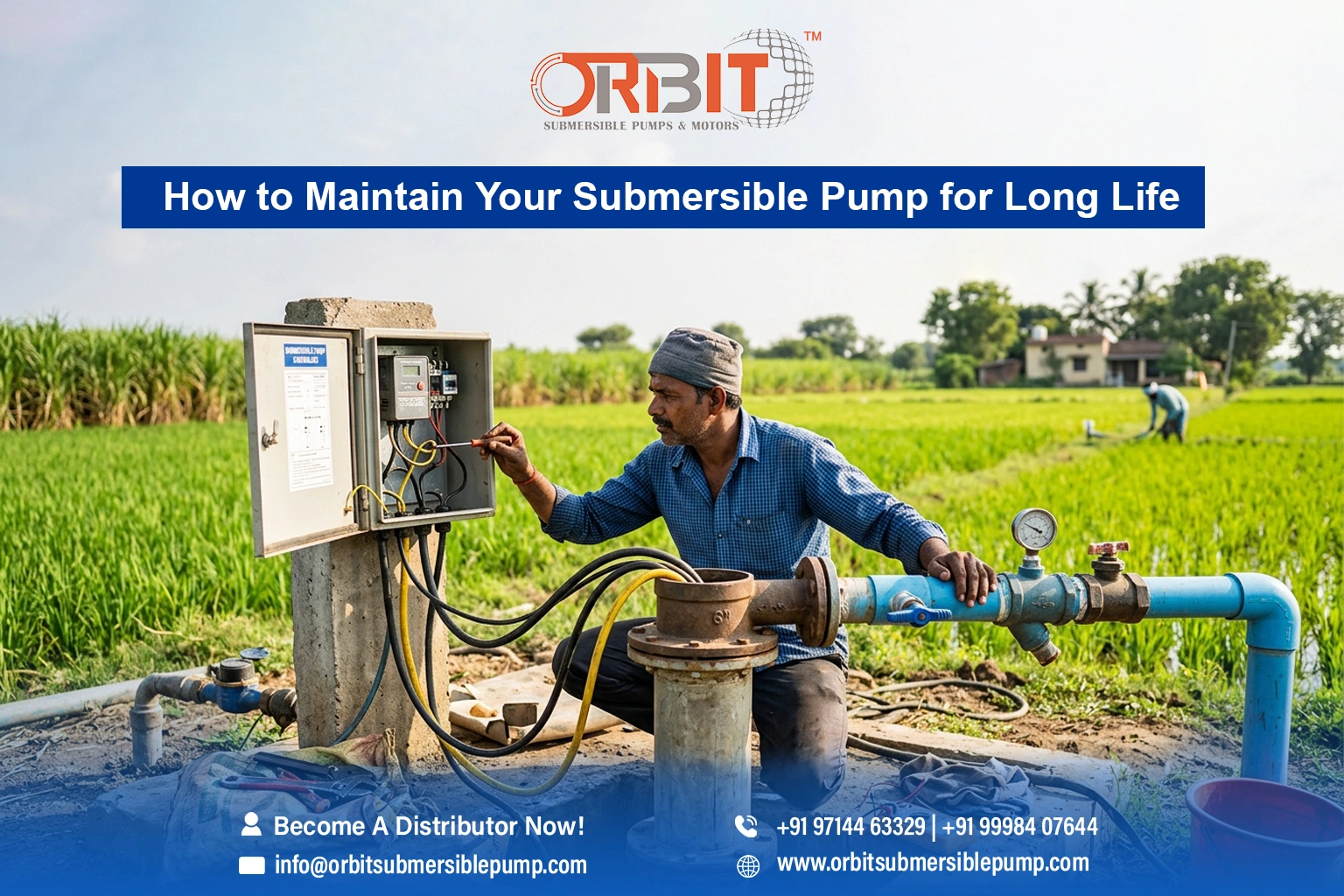
3. Inspect the Cables and Electrical Connections
Electrical problems are one of the biggest causes of pump failure. Water and electricity are dangerous together, so proper care of cables is very important.
What you should do:
- Check cables for any cuts, cracks, or damage before installing the pump.
- Make sure all connections are tight and waterproof.
- Use a voltage stabilizer or overload protector to guard against voltage fluctuations.
- Never pull the pump by its cable — always use a rope or chain.
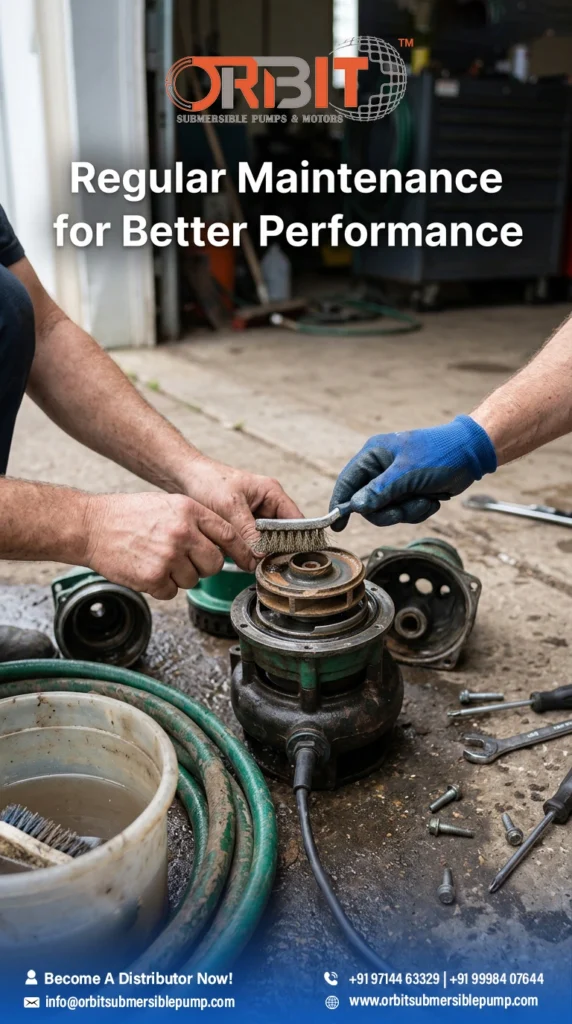
4. Clean the Pump Periodically
Over time, dirt, algae, and minerals can build up inside and outside the pump. This can block the flow of water and reduce the pump’s performance.
What you should do:
- Remove the pump from the water once a year for a full inspection and cleaning.
- Use clean water to flush out any buildup inside the pump.
- Check the impeller (the spinning part inside) for blockages or damage.